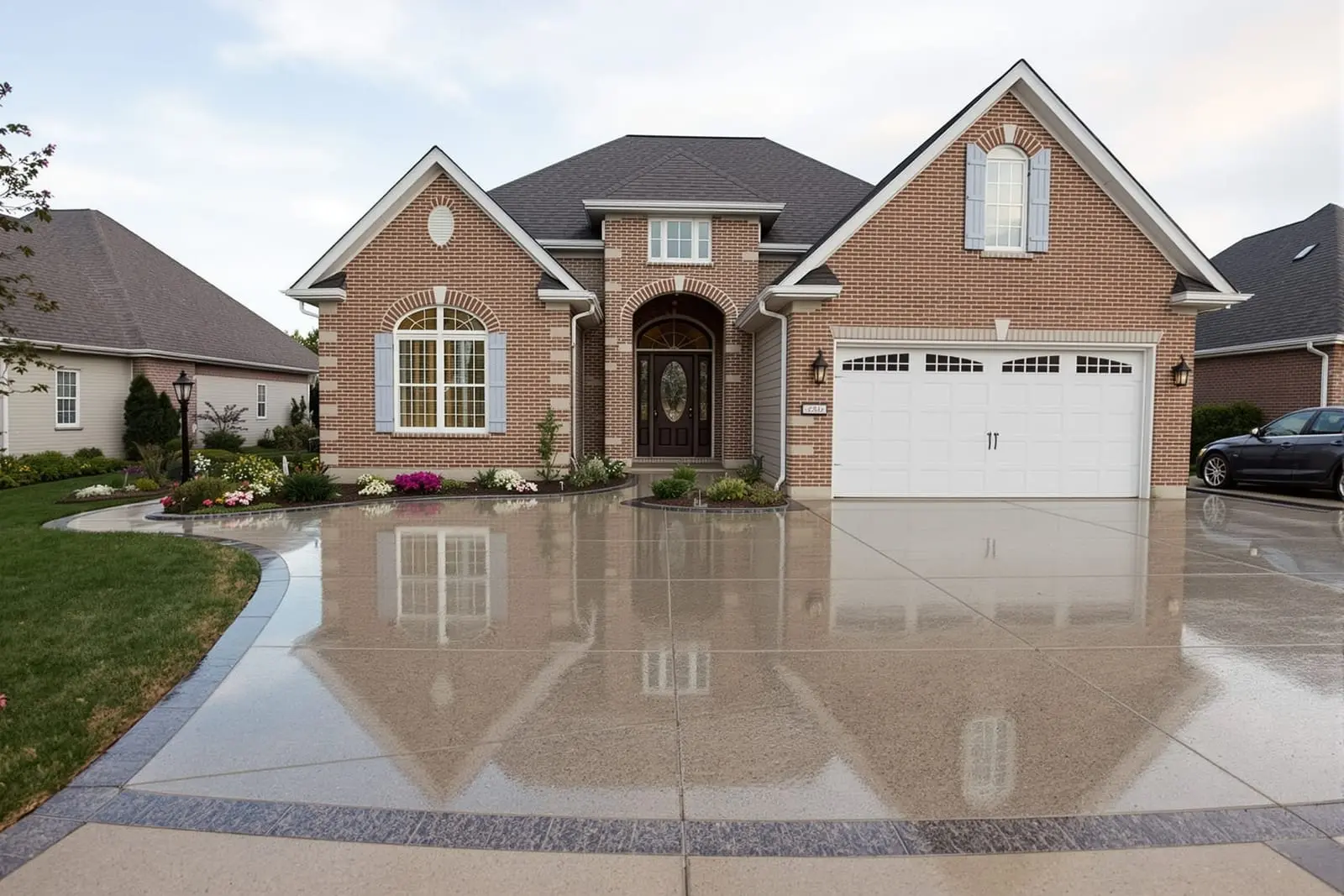
Get the look of stone, brick, or pavers with durable stamped concrete in Cincinnati, OH. We install decorative patios, walkways, and driveways using patterns and colors that complement your home. Our team carefully stamps, colors, and seals each project for a custom surface that stands up to daily use.
Primetime Concrete Cincinnati provides professional stamped concrete throughout Cincinnati, OH and the surrounding area. Our licensed, insured crew delivers safe, clean, on-time work with a free estimate before anything begins. Call (513) 586-6699 or request your free quote.
Stamped Concrete That Holds Up To Cincinnati Weather
Stamped concrete is only worth doing if it looks sharp and stays that way. At Primetime Concrete Cincinnati, we install stamped and decorative concrete that can handle freeze-thaw cycles, road salt, and humid summers without peeling or popping.
Most of our stamped concrete work in Cincinnati is for driveways, patios, walkways, and pool decks. We pour a single solid concrete slab, then imprint the pattern and add color while the surface is still workable. This gives you the look of stone, brick, or wood, with the strength and easy maintenance of concrete.
Our crews work across Hamilton County and the surrounding suburbs. We are familiar with what local inspectors and HOAs expect for visible exterior work, from expansion joint layout to surface texture requirements for slip resistance. When you call Primetime Concrete Cincinnati, you get practical guidance on what will actually pass review in your neighborhood, not just what looks good in a photo.
How We Install Stamped & Decorative Concrete (Step by Step)
A durable stamped concrete project starts below the surface. We begin by marking out the exact layout, including any curves and step locations, then mechanically excavate to the proper depth. For patios and walks this is typically 6 to 8 inches, and more for driveways that will carry cars and trucks.
We place and compact a crushed stone base, usually No. 57 limestone or similar aggregate that is easy to source around Cincinnati. Proper compaction is key in our freeze-thaw climate because poorly compacted base will settle and cause cracks and water pockets. On top of the base, we set concrete forms and double check slopes so water moves away from your house foundation, not toward it.
Next, we tie in rebar or wire mesh reinforcement where needed. For driveways, we often use a combination of rebar at key stress points and fiber-reinforced concrete throughout the slab. We then pour a concrete mix that is designed for our region, usually a 4,000 psi mix with air entrainment so it can handle winter conditions.
Color and stamping happen while the concrete is still green. Depending on your choice, we use integral color mixed into the truck, a color hardener broadcast on the surface, or both when a richer tone is needed. We apply a release agent, then lay the stamping mats in sequence and apply even pressure so the pattern depth is consistent. Joints are saw cut at the right time to control cracking, usually within 6 to 24 hours depending on temperature and humidity.
After the concrete cures sufficiently, we wash off excess release, detail any lines that need touch up, and apply a sealer once the slab has dried adequately. Timing this correctly is important. Sealing too early can trap moisture, which is a common cause of cloudy sealer you may have seen on older stamped patios around town.
Patterns, Colors, and Finishes That Fit Your Property
Stamped and decorative concrete is not one look. At Primetime Concrete Cincinnati, we help you narrow choices so your project matches both your house and your budget.
Popular patterns around Cincinnati include ashlar slate, cobblestone, random stone, and wood plank. We also install border bands to frame patios and walks. For example, you might choose an ashlar slate field with a contrasting brick-style border along the perimeter or at step edges.
Color can be subtle or bold. Many homeowners prefer earth tones that blend with brick or siding, such as slate gray, walnut, sandstone, or terra cotta. We can use a base color in the concrete and then use a secondary release color to create shading in the grout lines and low spots. This gives depth and a more natural stone appearance instead of a flat, painted look.
Beyond full stamping, we also offer:
• Decorative saw cuts that mimic large tile or geometric designs.
• Exposed aggregate bands or panels for added texture.
• Light broom or trowel finishes at entry areas where extra grip is required by some HOAs.
Bringing a photo or two of surfaces you like is helpful. We can tell you which patterns and color combinations age better in our climate and which might be hard to maintain, especially near trees or high traffic zones.
What Affects Cost and How To Plan Your Budget
Stamped concrete normally costs more than plain gray concrete but less than natural stone or pavers installed correctly. When Primetime Concrete Cincinnati prices a project, we look at several real factors instead of guessing by square footage alone.
Main cost drivers include:
• Site access: Backyards that require concrete to be pumped over the house or carried in tight spaces cost more than open driveways with direct truck access.
• Thickness and reinforcement: Driveways and areas that will see vehicles or heavy loads must be thicker and often need more steel, which affects price.
• Pattern complexity: Basic repeating patterns are more affordable than multi-pattern layouts, custom borders, or decorative saw cutting.
• Coloring system: Integral color only is usually less expensive than a combination of integral color, color hardener, and accent release colors.
• Preparation work: Removing old concrete, resolving drainage issues, or dealing with soft or saturated soil adds time and materials.
We provide written estimates that separate prep, concrete, stamping, and sealing so you can see where your money is going. If you have a budget target, tell us upfront. We can often adjust pattern choice, border details, or slab size to keep the project in range without cutting corners where it would hurt long-term performance.
Local Requirements, Permits, and Common Cincinnati Issues
In the Cincinnati area, some exterior concrete projects require permits, especially driveways that tie into the public sidewalk or street, or work on commercial properties. Primetime Concrete Cincinnati can help you determine if you need a permit from the City of Cincinnati or your local township, and whether inspections are required for forms or base material.
Drive approaches and sidewalks often must follow city standards for thickness, joint spacing, and sometimes surface texture. Some municipalities do not allow deeply textured stamping on public walkways because of slip resistance rules, so we may recommend a lighter texture or decorative border only in those locations.
HOAs in neighborhoods around Cincinnati, such as in West Chester, Mason, or Anderson Township, may require prior approval for visible stamped concrete surfaces, especially if colors are darker or mimic pavers or wood. We can supply pattern names, color charts, and a simple site plan you can submit to your HOA board.
Local issues we design around include winter deicing salts from city plows tracked onto stamped driveways, downspouts that dump water onto slabs and refreeze, and tree roots that can lift edges over time. We discuss salt-resistant sealers, drain routing, and expansion joint placement so you understand how each of these concerns is handled before the crew ever arrives.
Maintenance, Repairs, and Avoiding Common Stamped Concrete Problems
Stamped concrete in Cincinnati can look good for decades if it is installed and maintained correctly. The most important steps after installation are controlling water, managing deicing chemicals, and keeping up with sealer.
We typically recommend resealing stamped concrete every 2 to 4 years depending on sun exposure, traffic, and how much deicer hits the surface. South-facing driveways and pool decks may need attention sooner than shaded patios. When we complete your project, Primetime Concrete Cincinnati will outline a simple schedule and product type that is appropriate for your specific slab.
Common problems we see on older stamped concrete around town include flaking surfaces from cheap sealers, white haze from trapped moisture, and color fading where sealer has completely worn away. We can often restore these surfaces by carefully stripping failed sealer, cleaning the slab, applying a tinted sealer if needed, and then finishing with a compatible high-quality sealer.
Minor cracks are normal for any concrete, especially in our climate. Properly placed control joints keep most of these where they belong, but if a random crack develops we can often disguise it using tinted fillers and, in some cases, decorative saw cuts that turn a flaw into part of the pattern. Our goal is to keep your stamped concrete functional and attractive, not just on day one but over the long term.
“
Professional stamped & decorative concrete, done right the first time, quality materials, honest pricing, and results that last.
Primetime Concrete Cincinnati
Stamped & Decorative Concrete Across Our Service Area