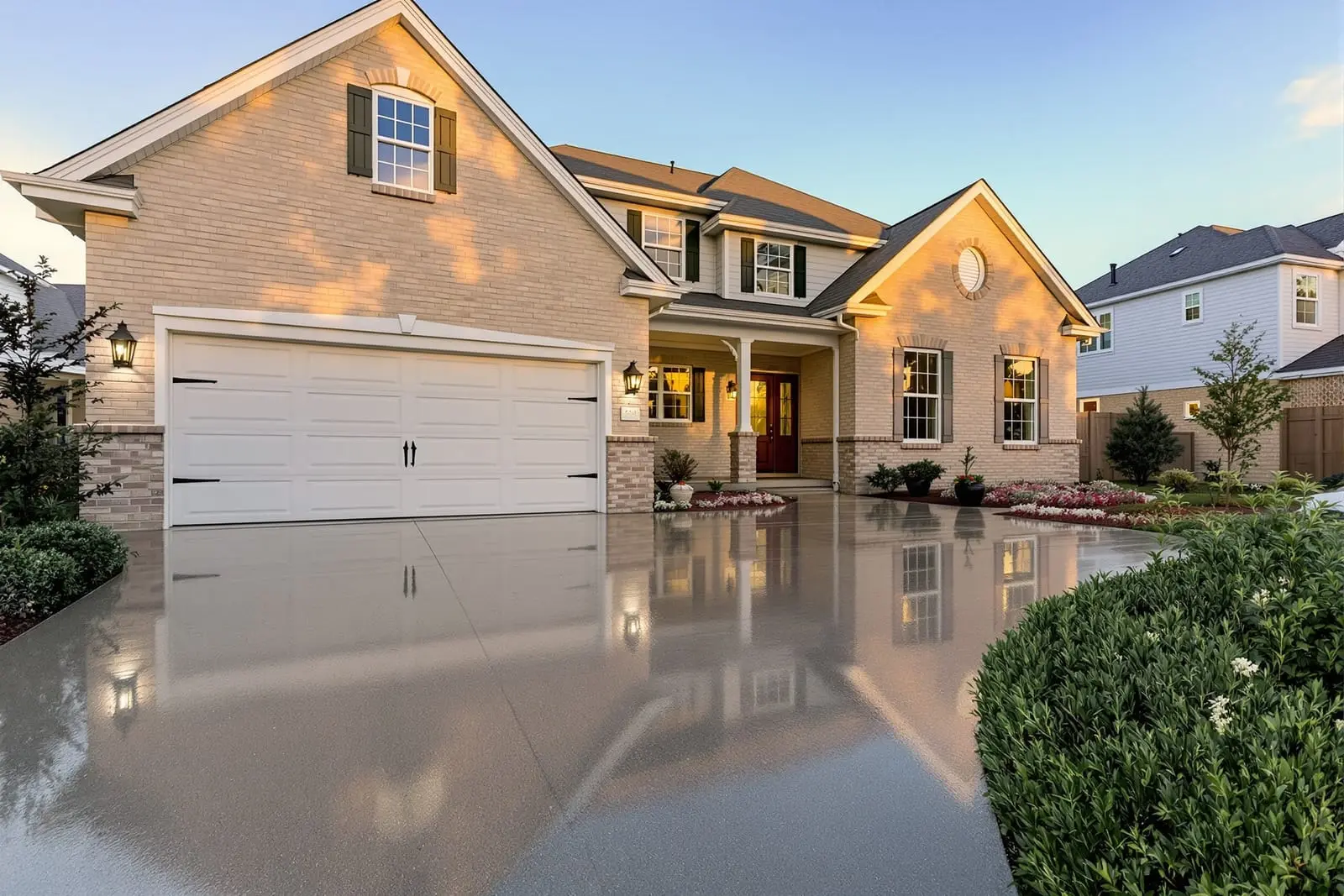
Get a durable, great looking driveway with expert concrete driveway installation in Cincinnati, OH. We remove old surfaces, prepare the base, and pour high quality concrete built to handle daily traffic. From new concrete driveways on new builds to replacing failing asphalt, we deliver smooth, long lasting results.
Primetime Concrete Cincinnati provides professional concrete driveway installation throughout Cincinnati, OH and the surrounding area. Our licensed, insured crew delivers safe, clean, on-time work with a free estimate before anything begins. Call (513) 586-6699 or request your free quote.
Concrete driveway installation in Cincinnati done the right way
If you are thinking about a new concrete driveway, you want it to look good for a long time, not just the first year. At Primetime Concrete Cincinnati, we focus on how a driveway performs through real Cincinnati weather: heavy rain in spring, freeze-thaw cycles in winter, and summer heat that can bake the surface.
We start by talking through how you actually use your driveway. Do you park a work truck or camper? Need extra space for kids to play basketball? Have a steep approach off the street? These details affect slab thickness, rebar layout, and where we put control joints so the driveway holds up under local conditions.
Because Cincinnati soil can vary from firm clay to softer fill, we never assume a standard approach. We check the base material, drainage paths, and any signs of previous settling, then design the installation around what your yard actually needs instead of forcing a one-size-fits-all layout.
From the first visit, you get clear answers on what is included, what is optional, and how the schedule lines up with the local weather window so you know exactly what to expect from your concrete driveway installation.
Our step-by-step driveway installation process
A durable concrete driveway starts under the concrete, not on top of it. Primetime Concrete Cincinnati follows a detailed, field-tested process on every concrete driveway installation so there are no shortcuts that come back to haunt you.
1. Site evaluation and layout
We mark out the new driveway with paint and string lines to confirm width, shape, and elevation. We check slopes against your garage floor and street so water flows away from structures and does not pond in the middle of the slab. On older Cincinnati homes, we often adjust grades slightly to fix long-standing drainage issues.
2. Demolition and excavation
For replacements, we break and remove the old driveway, haul the debris off-site, and expose the subgrade. If we find soft or saturated pockets, we dig them out instead of building over them. For new driveways, we excavate to the required depth to fit the stone base and slab thickness, typically 7 to 10 inches below finished grade depending on the design.
3. Base preparation
We install a compacted crushed stone base, usually 4 to 6 inches of limestone aggregate that packs tightly. In many Cincinnati yards, especially in neighborhoods with heavier clay, a solid base is what keeps your driveway from heaving or settling. We use a plate compactor or roller in multiple passes and check that the base is level or properly sloped for drainage.
4. Forms, reinforcement, and joint planning
We set wood or steel forms to precise elevations so the finished surface ties neatly into your garage floor and sidewalks. Reinforcement may include rebar grids or welded wire mesh, and on driveways that carry heavy vehicles we often upgrade to thicker slabs with more steel. Before we pour any concrete, we plan where to place control joints so the slab cracks in straight lines instead of random patterns.
5. Concrete placement and finishing
We pour a quality ready-mix concrete, most often a 4,000 psi mix for residential driveways in Cincinnati, and place it to the designed thickness. Our crew screeds, bull floats, edges, and finishes the slab, usually with a broom finish for traction in winter weather. In hot or windy conditions, we adjust timing and techniques so the surface does not dry too fast and weaken.
6. Curing and cleanup
After finishing, we apply curing methods that allow the concrete to gain strength properly, which may include curing compounds or wet curing depending on weather. We cut control joints at the right time so the edges stay crisp. Then we remove forms, backfill edges, clean the site, and walk you through how long to stay off the new driveway before you park on it.
Design and finish options for your new driveway
A concrete driveway does not have to look plain or industrial. Primetime Concrete Cincinnati offers design options that fit common Cincinnati styles, from older brick homes to newer subdivisions and hillsides.
Thickness and layout choices
Standard residential driveways are often 4 inches thick, but for heavier vehicles or longer driveways we usually suggest 5 inches or more in key areas. We can widen the driveway near the garage doors for easier parking or create a turnaround pad so you do not have to back onto busy streets.
Finish options
Most homeowners choose a broom finish that provides traction when snow or ice appear in January. For a more refined look, we can add a light swirl texture or a border with a different finish pattern. Around Hyde Park, Mt. Lookout, and similar neighborhoods, we often see driveways with clean, straight broom lines and crisp edges to match traditional architecture.
Color and decorative touches
If you want something beyond standard gray, we can use integral color or concrete stains for subtle earth tones that blend with your brick or siding. Decorative borders, saw-cut patterns, or exposed aggregate sections can dress up the entrance without making maintenance difficult. Our focus is on finishes that still handle salt, freeze-thaw, and regular traffic, not just something that looks good in photos.
Practical upgrades
We can thicken the concrete at the apron where the driveway meets the street, add extra reinforcement at turning points where tires stress the slab, or integrate small drainage channels to pull water away from low spots. These details may not be flashy, but in Cincinnati’s climate they make a real difference in how long your driveway lasts.
What affects cost and timing in Cincinnati
No two concrete driveway installations are priced the same, because several on-site factors affect the work. At Primetime Concrete Cincinnati, we walk you through these details so you understand what is behind your quote instead of seeing just a lump sum.
Key cost drivers
Driveway size and shape are obvious cost factors, but so are access and demolition. A simple, straight 2-car driveway that we can reach easily with a truck will cost less than a long, curved drive on a hill that needs extra forming and pumping. Removing thick or reinforced old concrete, or dealing with brick or asphalt layers underneath, can also change the price.
Soil and base work
If your existing driveway has settled, or your yard holds water after storms, we may need more excavation and stone base to create a stable foundation. In some Cincinnati neighborhoods with problematic clay or previous fill, we budget for additional stone or grading to avoid future cracking and heaving.
Concrete mix and reinforcement
Upgrading to thicker slabs, higher psi concrete, or more steel reinforcement costs more up front, but it is usually worth it if you park heavy vehicles or plan to stay in your home long term. We explain the tradeoffs clearly so you can choose between “minimum code” and “built to last” where it matters.
Seasonal timing
Cincinnati’s weather has a real impact on scheduling. Spring and fall are usually ideal, since temperatures are moderate and the ground is not deeply frozen. In summer, we may schedule earlier morning pours to avoid rapid surface drying. In winter, we avoid pouring when temperatures will drop too low during curing. If you have a specific deadline, like finishing before winter or before listing a home for sale, we factor that into your plan and discuss any weather-related risks.
How Primetime Concrete Cincinnati helps your driveway last
A new driveway is only as good as how it is protected and maintained once the crew leaves. We do not just pour concrete and disappear. Primetime Concrete Cincinnati gives you specific guidance that matches Cincinnati conditions so your concrete driveway installation holds up.
Crack control and realistic expectations
All concrete can crack over time, but good planning controls where and how it happens. We place and cut joints at the right spacing for your driveway length and thickness and pay attention to corners around sidewalks and steps, which are common crack points. We talk honestly about what is normal hairline cracking versus signs of a problem so you know when to call us.
Sealing and winter care
We typically recommend sealing your driveway after the first curing period with a quality penetrating sealer that helps against road salt and moisture penetration. In Cincinnati winters, avoid using ammonium or magnesium-based deicers on new concrete. We go over the best products to use, how soon you can apply them, and what to avoid so you do not accidentally damage the surface.
Drainage and edge protection
The edges of a driveway are most vulnerable to cracking and chipping, especially when cars drive off the side. We encourage simple landscaping or compacted stone along the sides to support those edges instead of leaving bare, eroded soil. Where downspouts or hillside runoff hit the driveway, we may suggest small drainage changes or splash blocks to prevent recurring water damage.
Follow-up and questions
After the job is complete, we are available to answer questions about care, sealing, or anything unusual you notice as the driveway goes through its first Cincinnati winter and summer. Our goal is that you feel confident using and maintaining your new driveway, not left guessing about what is normal.
“
Professional concrete driveway installation, done right the first time, quality materials, honest pricing, and results that last.
Primetime Concrete Cincinnati
Concrete Driveway Installation Across Our Service Area