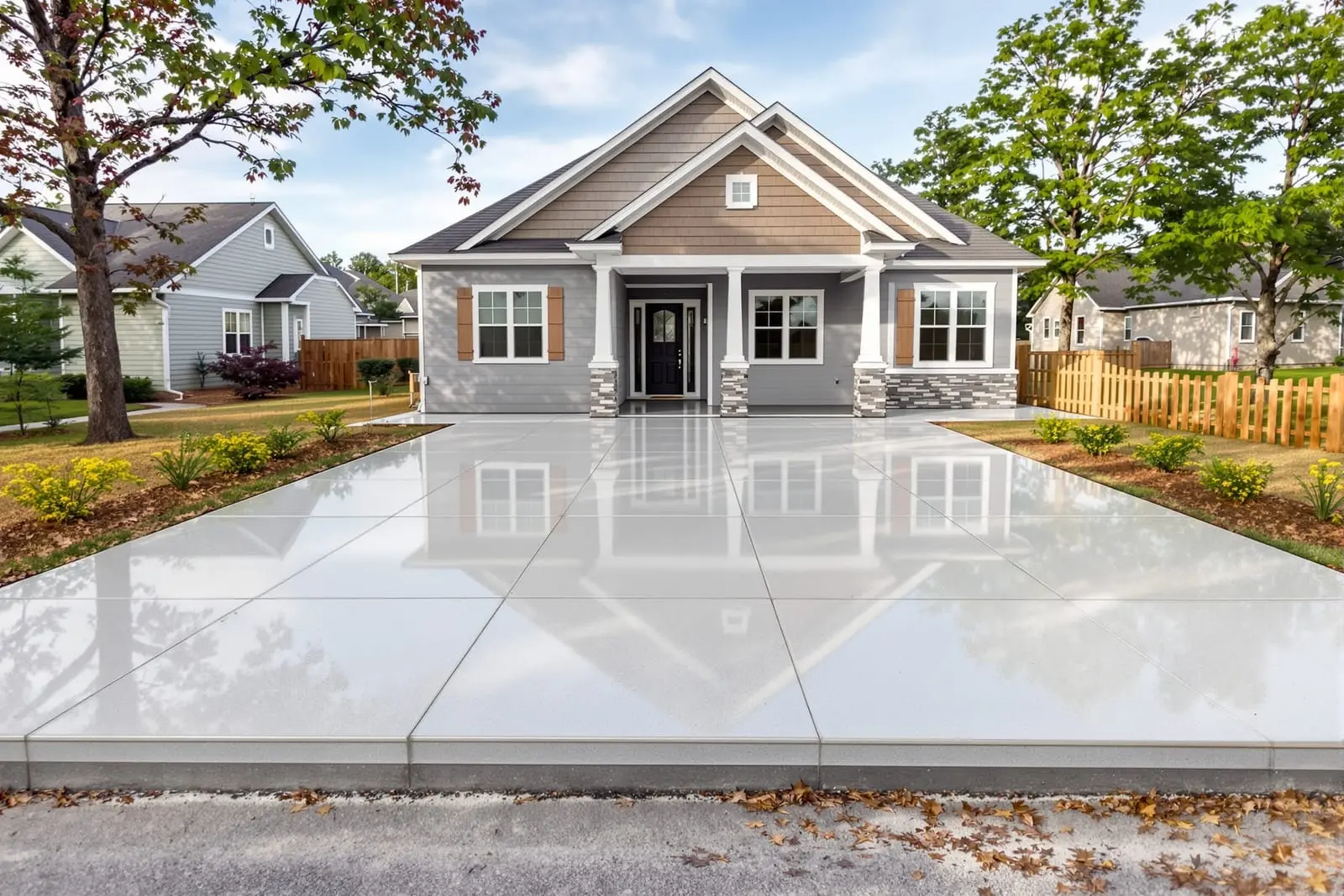
Count on us for precise concrete slab installation in Cincinnati, OH for garages, sheds, home additions, and more. We handle site prep, compaction, forming, and reinforcement to create level, long lasting slabs. Our focus is on correct thickness, control joints, and finishes that match your project needs.
Primetime Concrete Cincinnati provides professional concrete slab installation throughout Cincinnati, OH and the surrounding area. Our licensed, insured crew delivers safe, clean, on-time work with a free estimate before anything begins. Call (513) 586-6699 or request your free quote.
Concrete slab installation in Cincinnati, done the right way
If you are planning a new garage floor, shed pad, hot tub base, or room addition, the quality of your concrete slab installation will decide how long everything holds up. At Primetime Concrete Cincinnati, we focus on the unglamorous parts that actually make a slab last in our local freeze–thaw climate and clay-heavy soils.
In Cincinnati, a properly built slab starts with the soil. Our crews do not just scrape the grass and pour. We remove organic material, check soil conditions, and compact the subgrade so the slab will not settle and crack in a year or two. For soft or disturbed areas, we may add crushed limestone and compact in thin lifts with a plate compactor or roller. This is especially important in older Cincinnati neighborhoods where decades-old fill dirt can be loose or inconsistent.
From there, we size the slab based on how you will use it. A light-use patio or walkway might be 4 inches thick with fiber-reinforced concrete, while a driveway, RV pad, or garage floor is usually 5 to 6 inches with steel reinforcement. If you plan to park heavier trucks or equipment, we will talk about going thicker or tightening the reinforcement grid. We also pay attention to access. Narrow city lots, steep hills in places like Mt. Adams, and tight alleys in older parts of Cincinnati often affect how we bring in the concrete truck or whether we need a pump truck.
Our step-by-step concrete slab installation process
Every concrete slab installation we do in Cincinnati follows a clear process, but we adjust the details based on your site and how the slab will be used.
1. Site visit and evaluation
We start with a walkthrough of your property. We check drainage, existing grades, access for trucks, and any nearby structures or utilities. Cincinnati has a lot of sloped yards and older buried utilities, so we often coordinate with 811 for utility marking and talk through how water will move around the new slab to avoid puddles against your house or garage.
2. Layout, excavation, and base prep
We set form boards to the correct dimensions and elevations, using string lines and levels so slopes are intentional and water flows away from structures. Then we excavate to the required depth. After excavation, we compact the exposed soil and install a base of compacted gravel or crushed limestone. This base layer improves drainage, reduces frost heave, and supports the slab uniformly.
3. Forms, vapor barriers, and reinforcement
We use sturdy wood or metal forms, well braced so they will not bow when the concrete is placed. For interior slabs, basement floors, or slabs under finished living space, we typically install a polyethylene vapor barrier and, if needed, insulation board. Reinforcement can be steel rebar in a grid pattern, welded wire mesh, or fiber-reinforced concrete, depending on the load and budget. For example, a Cincinnati homeowner putting in a hot tub pad will usually get a thicker slab with a tighter rebar pattern than a simple garden shed pad.
4. Pouring, leveling, and finishing
On pour day, we schedule the concrete truck to match the size of the job and neighborhood access. The mix design usually uses a 4,000 PSI concrete for exterior slabs that face freeze–thaw cycles and deicing salts. Our crew places the concrete, then screeds it level, bull floats to bring up cement paste, and sets control joints at planned locations. Finish options range from a standard broom finish for driveways and sidewalks to smoother or decorative finishes on patios. We never overwork the surface with too much water, which is a common shortcut that leads to weak, dusty top layers.
5. Curing and cleanup
Proper curing is the part many people never see, but it matters for long-term durability. We usually apply a curing compound or use wet curing methods to keep moisture in the slab for the first several days. We will let you know exactly when you can walk on the slab, move furniture onto it, or drive on it. For most driveways in Cincinnati, light vehicle traffic is allowed after about 7 days and full strength is reached around 28 days. We finish by removing forms, backfilling edges where needed, and leaving the site neat.
What affects the cost of a concrete slab in Cincinnati
Concrete slab installation pricing is not one-size-fits-all, and we are upfront about what really drives cost for homes and businesses around Cincinnati.
Slab size and thickness are the most obvious factors. A 10x10 patio at 4 inches thick uses far less concrete than a 24x24 two-car garage floor at 5 or 6 inches. However, two slabs of the same size can still be priced differently depending on the base preparation needed. If we are building on firm, well-drained soil, prep is simpler. If your property has soft spots, old backfill, or poor drainage, we may need extra excavation and more stone base, which adds cost but prevents much more expensive repairs later.
Reinforcement choices and mix design also matter. Using more rebar, going with 4,500 PSI concrete, or adding air entrainment for better freeze–thaw resistance will cost more up front but is usually a smart investment for exterior slabs exposed to Cincinnati winters and road salt. If you plan to keep heavy equipment, campers, or large trucks on the slab, upgrading reinforcement and thickness is cheaper than having to demo and replace a failed slab.
Site access and layout are the hidden cost drivers in many projects. In tightly packed Cincinnati neighborhoods or hilly areas, getting a truck close to the pour can be difficult. If we need a concrete pump, additional labor for wheelbarrowing, or extra form work for slopes and steps, the labor portion of the price will increase. We also account for any demolition of old concrete, tree root issues, or removal of existing structures.
During your estimate, Primetime Concrete Cincinnati explains these factors in plain language, with options. Many times we present a good, better, best approach so you can decide whether to invest in a heavier-duty slab or keep things basic for lighter use. The goal is to match the slab to your actual needs and Cincinnati’s climate, instead of overselling or underbuilding.
Local codes, permits, and inspections for concrete slabs
Concrete slab installation in the Cincinnati area often interacts with local building codes, zoning rules, and sometimes HOA guidelines, especially for driveways, room additions, and larger detached structures.
Within the City of Cincinnati and many nearby jurisdictions, flatwork like small patios may not need a formal building permit, but attached structures, room additions, garage slabs, and some driveway expansions can trigger permit and inspection requirements. Depth, reinforcement, distance from property lines, and how the slab connects to your home can all be regulated. For example, a slab supporting habitable space or a structural wall will be held to stricter code requirements than a freestanding garden shed pad.
Primetime Concrete Cincinnati helps you understand what applies to your project. If your slab is part of a larger permitted project, like a home addition, we coordinate with your general contractor to meet the engineer’s or architect’s details. Where a standalone permit is needed, we can provide site sketches, slab specifications, and reinforcement layouts so your application moves smoothly. We are used to working with local inspectors who want to see base prep, reinforcement, and sometimes formwork before pouring.
If you live in an HOA community anywhere around Cincinnati, there can be rules about where you can place a slab, its size, color, and even surface texture. For example, some neighborhoods want driveway extensions to match existing broom finishes and prohibit bright color tints. We are happy to provide photos and finish descriptions you can submit with your HOA application to speed up approval.
Slab location also matters for drainage rules. Adding a large concrete area can change how rainwater flows on your property and onto neighbors’ yards or the street. Local guidelines usually require that new hard surfaces do not send water directly onto neighboring properties. During planning, we look at downspouts, existing grading, and nearby storm drains to design slopes and edges that comply with local expectations and protect your home.
Design options, durability tips, and how to choose your contractor
A concrete slab can be purely functional, or it can be a finished surface you enjoy every day. When we plan a concrete slab installation, Primetime Concrete Cincinnati helps you think beyond a plain gray rectangle.
For patios, walkways, and outdoor living spaces, we can add decorative touches like colored concrete, exposed aggregate, or stamped patterns that mimic stone or pavers. Even a simple broom finish can be customized with different broom textures and border details. We also discuss edge treatments, such as rounded edges for safety or formed steps that match the slab. For interior or garage slabs, we may plan a smoother trowel finish if you intend to apply epoxy coatings, tiles, or other floor coverings.
Long-term durability in Cincinnati’s climate comes down to three things: good subgrade preparation, proper reinforcement, and correct joint placement and sealing. Control joints help manage where cracks appear. We cut or tool these joints at calculated intervals based on slab thickness and shape. If you have long, narrow sections, like side yards or driveway arms, we may add more joints to prevent random cracking. We also recommend sealing exterior slabs after they cure to reduce damage from deicing salts and moisture.
When comparing concrete contractors, ask specific questions about these details. A solid contractor should explain how deep they will excavate, how they will compact the base, what slab thickness and PSI they recommend, and exactly how reinforcement and control joints will be handled. Ask how they plan to manage water around the slab, what kind of finish they suggest, and what curing process they follow. Detailed, clear answers are a sign that you are getting more than a basic “pour and go” job.
Primetime Concrete Cincinnati focuses on clear communication and predictable outcomes. We walk you through each decision so your slab matches both your budget and your long-term plans for the space. Whether you are adding a simple shed pad in your backyard or a heavy-duty driveway extension, we deliver concrete slab installation that is designed for how Cincinnati homes and businesses really use their concrete every day.
“
Professional concrete slab installation, done right the first time, quality materials, honest pricing, and results that last.
Primetime Concrete Cincinnati
Concrete Slab Installation Across Our Service Area