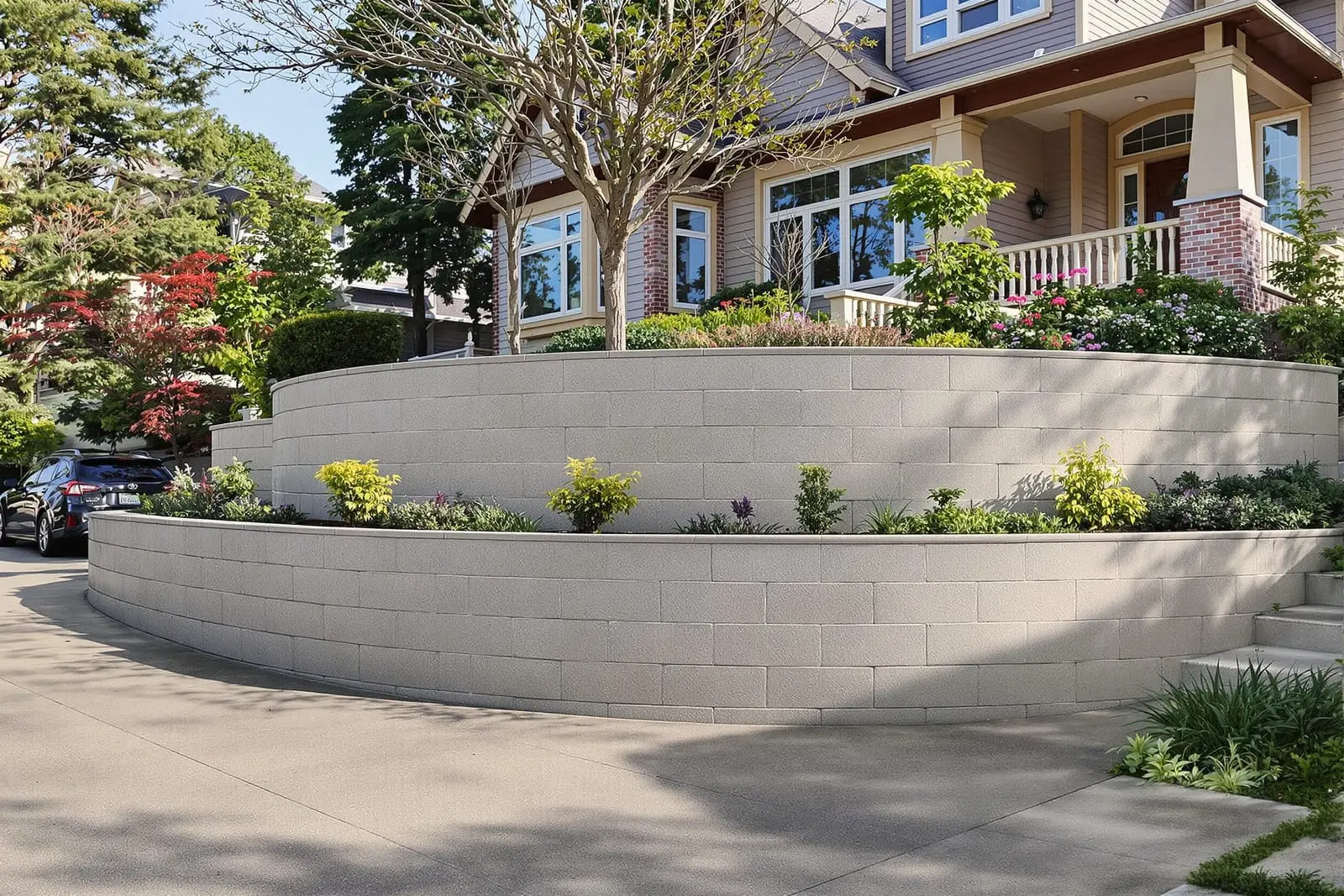
Stabilize slopes and add structure with concrete retaining walls in Cincinnati, OH. We design and pour walls that help manage grade changes, control erosion, and define outdoor spaces. Our crew builds reinforced walls with proper drainage so your yard improvements stay solid over time.
Primetime Concrete Cincinnati provides professional concrete retaining wall throughout Cincinnati, OH and the surrounding area. Our licensed, insured crew delivers safe, clean, on-time work with a free estimate before anything begins. Call (513) 586-6699 or request your free quote.
Concrete Retaining Walls Built for Cincinnati Hillsides and Backyards
A concrete retaining wall is more than a border. In Cincinnati it is often what keeps your yard, driveway, or basement from dealing with constant washouts and mud. Primetime Concrete Cincinnati designs and builds retaining walls that match the real slopes and soils we see here, from Mt. Adams and Price Hill to Anderson Township and Colerain.
We start with what the wall actually has to do. For a front yard along a sloped city street, the goal might be to hold back a few feet of soil and create flat parking. For a backyard off the Ohio River valley, the wall may need to retain 6 to 10 feet of wet, heavy clay and manage groundwater from uphill neighbors. We inspect the slope, measure elevations, and look at how water currently moves through the area before we talk style or finish.
Primetime Concrete Cincinnati installs both poured concrete retaining walls and modular concrete block walls, and we often combine structural concrete with decorative face options. We walk you through the pros and cons of each based on height, look, and budget, instead of pushing a one size fits all solution. The goal is simple: a wall that will still be doing its job when your kids are grown, not something that looks nice for a year and then cracks or leans.
Our On Site Process, From Layout to Final Drainage
Once you approve the design and estimate, our crew schedules your project around the weather. Cincinnati clay can be unforgiving when it is saturated, so for larger excavations we avoid digging after heavy rain when possible. On day one, we mark utilities, set string lines, and confirm wall location and height with you so there are no surprises.
Excavation is the first major step. For a typical residential concrete retaining wall we dig down below frost depth (around 32 inches in our area) to create a solid footing. We over excavate behind the wall so there is room for drainage stone and a drain tile system. During this step we often find old rubble, tree roots, or buried concrete from previous owners, and we discuss how removal might affect cost and timeline before proceeding.
For poured concrete walls, we build and brace forms, install rebar according to the load and height of the wall, and place a perforated drain pipe at the base that outlets to daylight or a drain basin. We then pour the concrete in one continuous pour where possible, using mixes suitable for freeze thaw cycles. For segmental concrete block walls, we install a compacted gravel base, place the first course perfectly level, then stack and backfill in lifts, compacting as we go.
Before we backfill, we add washed stone and filter fabric behind the wall so water can move freely to the drain tile instead of pushing on the wall. This proper drainage step is what separates a wall that stays straight from one that tilts after a few winters. We finish by grading the area, tying in gutters or downspouts if needed, and cleaning up so you can actually use the new space right away.
Design Options: Structural First, Then Looks
Concrete retaining walls do not all have to look like plain gray slabs. Primetime Concrete Cincinnati starts with the structure, then gives you options to match your home and neighborhood. For poured concrete, we can leave a smooth trowel finish, apply a broom finish for more texture, or use form liners that imprint patterns such as stone or board formed wood. We can also stain or color the concrete so it blends better with brick or siding colors common in Cincinnati.
Segmental concrete block walls are popular for front yards and landscaping because the blocks come in various colors and face textures. We often install these in Hyde Park and Montgomery where homeowners want a more polished look facing the street. These block systems are engineered for specific wall heights, and for taller installations we integrate geogrid reinforcement layers that extend back into the soil.
For sloped backyards, terraced walls can be a smart option. Instead of one tall concrete retaining wall, we sometimes build two or three shorter walls with flat planting or seating areas between them. This reduces soil pressure on each wall, helps with drainage, and gives you usable space for gardens or play areas.
Top treatment matters too. We can pour a concrete cap, install precast caps, or integrate a wider seat cap so the wall can double as casual seating around a patio or fire pit. Where safety is an issue, such as along driveways or drop offs, we coordinate railing posts with the wall design so the posts are anchored into the concrete correctly and look intentional instead of tacked on.
What Affects Cost and How We Keep Projects Predictable
Concrete retaining wall pricing in Cincinnati is mainly driven by height, length, access, and soil conditions. A short wall along a driveway in a wide open yard is straightforward. A 7 foot tall wall in a tight city lot with steep access and wet clay is a different project entirely. Primetime Concrete Cincinnati walks you through these factors so you know why the numbers are what they are.
Height and engineering requirements matter most. Many walls over 4 feet visible height should have an engineer stamped design, especially if they are close to property lines, public sidewalks, or structures. We coordinate with local engineers when needed, which adds some upfront cost but avoids very expensive failures later. We also factor in any city of Cincinnati or Hamilton County permit requirements for your specific location.
Access can change labor and equipment costs. If we cannot get a skid steer or mini excavator to the site, more digging and hauling must be done by hand. In older neighborhoods like Northside or Clifton, tight side yards and overhead wires can limit equipment choice. We look at this during the first visit and include it clearly in the estimate.
Soil type and water are the other big drivers. Cincinnati has areas of heavy clay that hold water and areas with previous fill that can be loose or unpredictable. Unstable or saturated soils may require over excavation, additional stone backfill, or reinforcement. We tell you in advance where we see risk for extra haul off or stone and how we will handle it if conditions are worse than expected once we dig.
To keep projects predictable, Primetime Concrete Cincinnati uses written scopes that spell out wall dimensions, reinforcement, drainage components, finish type, and what is and is not included in cleanup and restoration. Change orders only happen when conditions are truly different from what anyone could see before digging, and we stop and talk through options before you are committed.
Local Issues: Frost, Drainage, and Fixing Failed Walls
Cincinnati winters and spring storms are hard on retaining walls. Freeze thaw cycles cause the top few feet of soil to expand and contract, and poorly drained clay amplifies the pressure. Many of the calls Primetime Concrete Cincinnati gets are from homeowners with older railroad tie walls that are rotting, or block walls that are bowing out or leaning over driveways.
When replacing a failed wall, we do not just copy the old layout. We look for why it failed. Common causes in our area include no drain tile at the base, fine soil directly against the wall instead of washed stone, downspouts dumping behind the wall, or shallow footings that sit in the frost zone. We correct these issues in the new design, often adding deeper footings, more stone, and positive drainage to daylight or storm systems.
Existing concrete retaining walls can sometimes be repaired instead of fully replaced. If a wall has minor cracking but is structurally sound, we may epoxy inject the cracks, seal the surface, and improve drainage behind it. If a wall is only slightly leaning, we evaluate whether excavation and reconstruction of the backfill and drainage will stabilize it. We are honest about when repair is not worth the risk and replacement is the safer choice.
For new builds, we always consider how gutter runoff, neighbor grading, and sump pump discharge will interact with your wall. In many Cincinnati neighborhoods with older basements, sump lines often daylight near property lines. We plan for that water so it does not sit behind your new wall.
Before you hire any contractor to build a concrete retaining wall, ask to see local projects that are at least 5 years old and ask specifically how they handled drainage and frost depth. Primetime Concrete Cincinnati can show you walls that have been through multiple winters without movement so you can feel confident you are getting a long term solution, not just a quick fix.
“
Professional concrete retaining walls, done right the first time, quality materials, honest pricing, and results that last.